-
Did TikTok save Barnes and Noble?
If you don’t have TikTok, you’re probably not familiar with TikTok culture. It’s known by most users that TikTok has different corners based on a specific user’s interests. If you watch a lot of cat videos, the algorithm will detect that and show you more cat videos, and suddenly you’re on “CatTok”. The corner of “bookish” users is known as BookTok, and it’s the reason I got back into reading. It’s the reason a lot of people got back into reading.
If you go to Barnes and Noble, most locations will have a table with a sign that says BookTok.
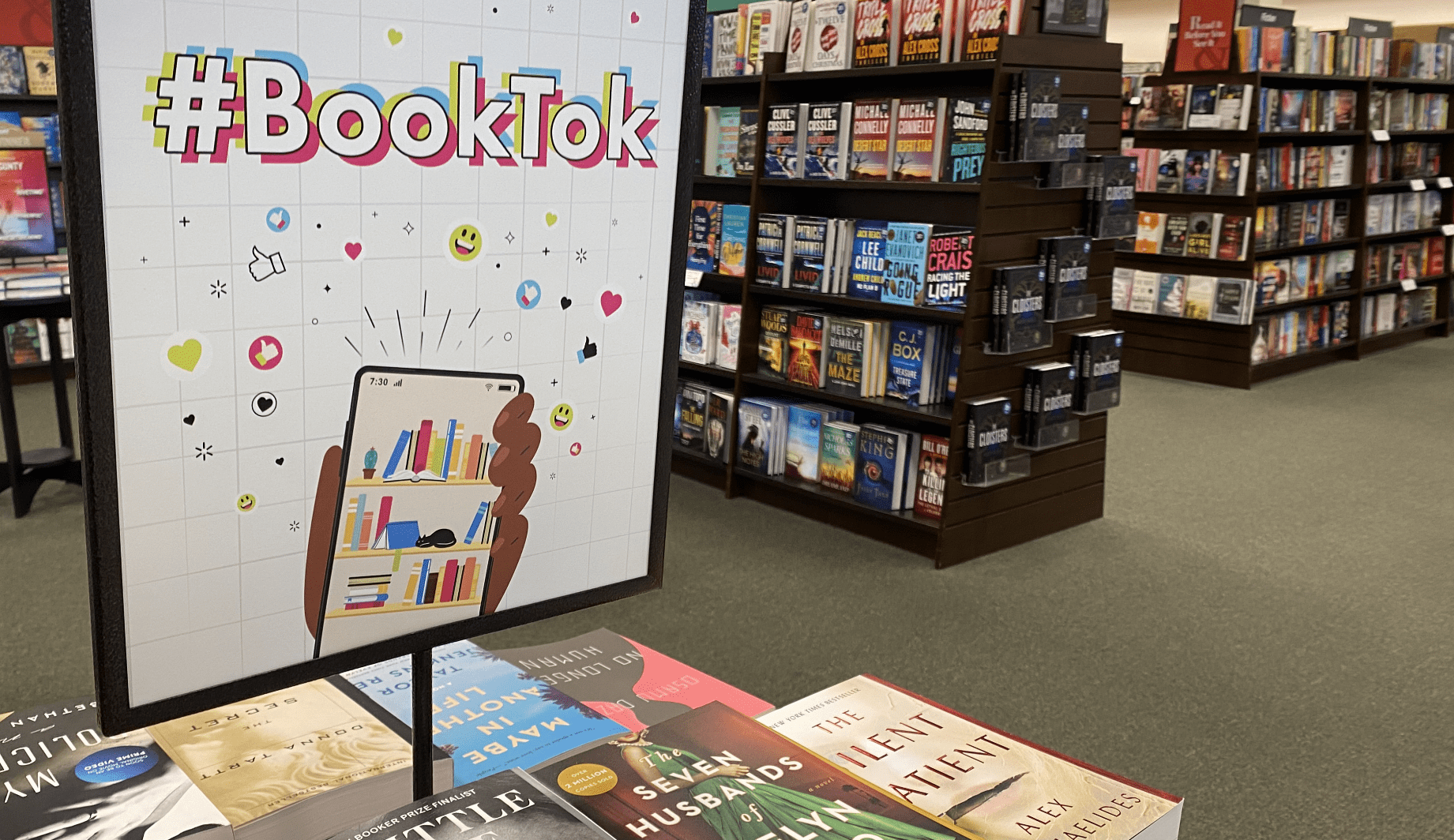
It is always filled with books that creators on BookTok have raved about. For example, Song of Achilles was published in 2011, but experienced a huge boost in sales after going viral on TikTok in 2021. It is now a staple on every BookTok table at Barnes and Noble.

I used to work at a store near a Barnes and Noble location, so I went to their café a lot for coffee and food. Barnes and Noble sells Starbucks coffee, but all the food they offer is their own, so don’t go to Barnes and Nobles expecting to be able to get a cake pop or pay with your Starbucks app. One of the foods that Barnes and Noble sells is mac and cheese. It’s a white cheddar, and you can get it in a cup or bowl, similar to Panera. From a self proclaimed mac and cheese expert, it’s amazing.
One time, I went to Barnes and Noble on my lunch break to get the mac and cheese, and they were sold out. I ended up getting something else, but I tweeted about how sad I was that they were out because I had been really looking forward to it. Someone I had met in college responded, shocked that Barnes and Noble sells mac and cheese of all things. It made me realize that some people haven’t been to Barnes and Noble in years. If you’re not a reader or taking an English class with a reading list, why would you? That interaction is what inspired this whole post.
So yeah, Barnes and Noble sells mac and cheese. And chicken nuggets. And vegan brownies that are extra good if you microwave them for a few seconds.
Was this Barnes and Noble’s attempt to save themselves from going under? No one reads anymore, and you can get books for cheap on Amazon, so why even keep bookstores open at all?
I wholeheartedly believe that BookTok brought Barnes and Noble back from the dead. There has been a significant increase in the number of people that consider themselves readers, and it makes me so happy. Barnes and Noble is a very comforting place for me, so to see that it’s been revived is amazing.
There have also been rumors that Barnes and Noble will introduce a wine bar in stores. I’m not much of a drinker, but there’s just something about wine and books that makes sense.
If you can afford it, I will always recommend buying books from local bookstores first, then Barnes and Noble, then Amazon. Yes, Amazon usually has the best prices, but their goal is to be the top book supplier. If Amazon takes over the bookselling industry with such low prices, local bookstores and Barnes and Noble can’t compete, and the comfort of physical bookstores, with the smell of coffee and new books, will die out. I’m grateful to TikTok for saving Barnes and Noble in the first place, and now it’s our responsibility as consumers to save them with our business.
I also highly recommend Goodwill bookstores and other pre-owned bookstores for the best deals. Half the books on my bookshelf were purchased from Goodwill or my local library, which has its own little bookstore. I’ll admit that I’ve purchased books from Amazon, and I think there are times when it’s justifiable, especially if you need to buy books for school. But if you can afford it, try to support your local bookstore.
-
Something in the Heir
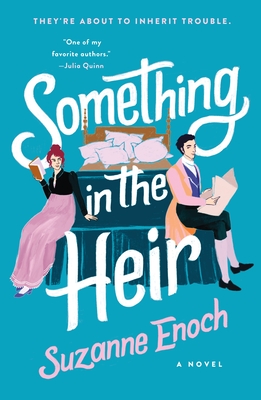
Book Review – Something in the Heir
Author – Suzanne Enoch
Genre – Regency Romance
Rating – 3/5 Stars
Time it took to read – 3 days
*This review contains spoilers*
Summary of the book, copied from the back cover:
“Emmeline and William Pershing have enjoyed a perfectly convenient marriage for eight years. Their relationship is a seamless blend of their talents and goals. They’ve settled into separate, well-ordered lives beneath the same roof, and are content to stay that way—or so Emmeline thinks. And if William has secretly longed for a bit more from the woman he adores, he’s managed to be content with her supreme skills as a hostess and planner, which has helped him advance his career.
Then when Emmeline’s grandfather, the reclusive Duke of Welshire, summons them both for his birthday celebration and demands they bring their two little angelic children, William is stunned to discover that his very proper wife invented not one, but two heirs to fulfill the agreement for living at Winnover. But surely if Emmeline and William team up and borrow two cherubs to call their own, what could go wrong? Enter George, age 8, and Rose, 5—the two most unruly orphans in Britain.
As the insanity unfolds, their careful, professional arrangement takes some surprisingly intimate turns as well. Perhaps it takes a bit of madness to create the perfect happily ever after.”
Overall, I enjoyed this book a lot. It was a regency era romance novel, and reminded me a lot of Bridgerton. After some research, I learned that the author of Something in the Heir and the author of Bridgerton actually wrote a book together, so the similarities make a lot of sense.
The book is told from a third-person limited perspective, which wasn’t very clear in the beginning. It wasn’t until a portion of a chapter was written from one of the children’s perspectives that I realized the POV. Once I realized, it was a lot easier to keep track of, and was actually really interesting. I’ve read books that change perspectives per chapter, but I’d never seen it done this way before, where it isn’t explicitly stated whose perspective you’re currently reading.
I felt like the entire plot was very predictable, and the book left me wanting more. I would have loved to see more of a romance between Emmeline and William, but a lot of the details were left out or implied. There were a few intense moments between them. However, in one chapter, they kissed for the first time in nearly 8 years, and the next, they were sharing a bed again. A book doesn’t need to be explicit to show the progression of that relationship. I would’ve liked to see a conversation between them where they confessed their feelings. The scene where they finally said “I love you” was extremely underwhelming.
It was also very obvious that both the adults and children wanted to become a true family, and the excuse for it was repeated so much that it seemed like the author was trying to convince us that it was an actual problem. It was very obvious that they would end up adopting the children in the end, just for the end to happen so abruptly that it diminished the issue entirely. Everything was solved in the last chapter and the epilogue, that the whole plot felt useless. I would’ve liked to see the new family navigate the new family dynamics, and how they handled the news with friends and family. I would have loved a scene between Emmeline and Hannah about her engagement to Bennet. William’s family is only mentioned a few times, which I feel was also a missed opportunity.
The book was written in an interesting format, and the plot was fun. Overall, it left me wanting more, and not in a way that left me hoping for a sequel.
-
Netflix leaks policy information regarding password-sharing
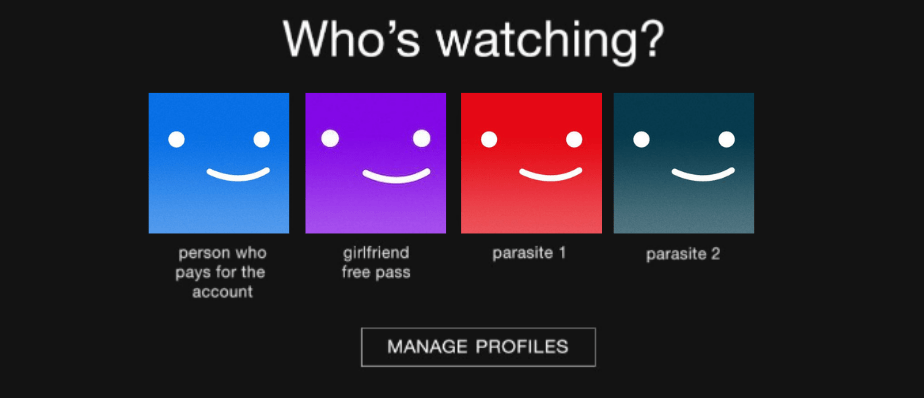
On Wednesday, Netflix accidentally shared information regarding new password-sharing policies on their help center page. Once the information was discovered, the internet went into a mass frenzy of questions.
The response seems to be completely negative, with good reason. Not only did the help center state that a user’s account is only accessible from one IP address, the user has to access the account at least once every 31 days. What’s worse, if they plan to travel, and still want to use their account, they have to notify Netflix with their travel plans in order to still have access.
This has sparked outrage as users on Twitter began expressing their concerns. Multiple tweets with hundreds of thousands of likes and millions of views have gone viral, making fun of the policies and predicting the downfall of Netflix.
Netflix is currently testing the policy in Chile, Peru, and Costa Rica. They are attempting to implement a “paid-sharing” policy, where users can pay an additional fee to enable multiple devices across multiple IP addresses for one account. Users are questioning the effectiveness of this policy, questioning if it’s fair to charge extra for specific circumstances. A popular question is how it will apply to students living in college dorms while still being supported by their parents. Another concern is having to inform Netflix of travel plans, with users stating that the only time they’ve ever had to inform a company of travel plans is credit card companies to prevent fraud.
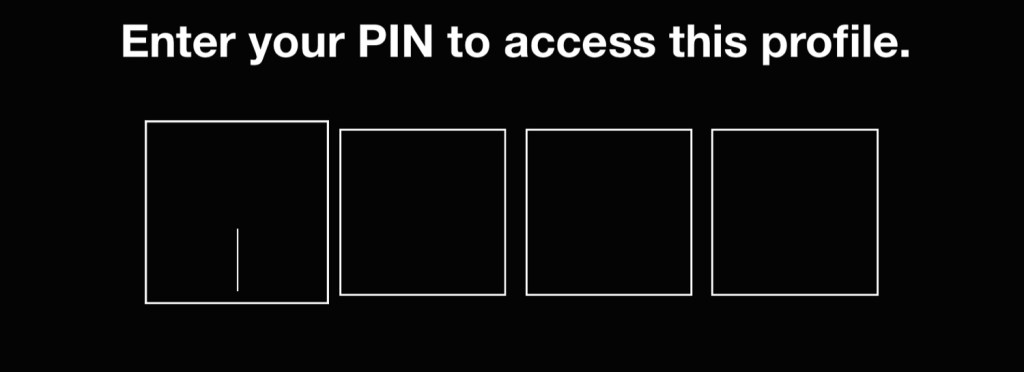
With paid-sharing, users that are not connected to the verified IP address will be asked to enter a pin number, which they will have 15 minutes to input. The pin will be sent to the owner of the account. This way, no one is able to access the accounts of users they are not in contact with.
Many Netflix users have said that once the policies are officially implemented, they may cancel their accounts rather than attempting to deal with the new policies. Netflix continues to cancel popular shows, their selection of non-Netflix produced content is continuing to diminish, and there are other streaming sites that are not blaming their customers for low profits.
A Netflix representative said that by password-sharing, users are “undermining our long-term ability to invest in and improve Netflix.”
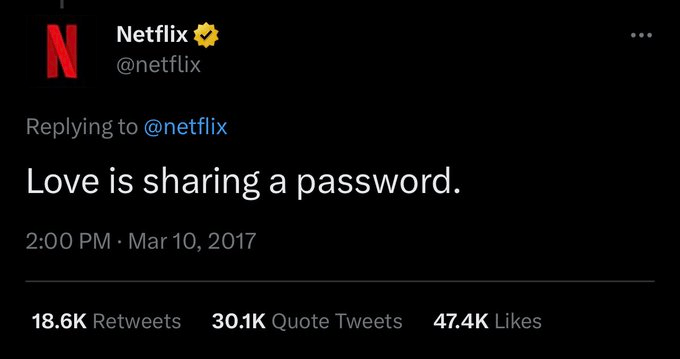
A tweet that Netflix posted in 2017 has also gained attention recently. In the tweet, Netflix said “love is sharing a password.” Twitter users have been using this tweet to call out Netflix on the hypocrisy of the new password-sharing policy.
Rather than doing customer research to find ways to actually boost sales and encourage new users to join, Netflix seems to be taking steps backwards. They should be providing incentives to encourage people to get their own accounts rather than password-sharing, but they are being stubborn. The new policy may have the opposite effect than what they’re hoping for, and they may become just like the movie rental company that they put out of business in the first place.
The policy is expected to begin by the end of March, according to a letter sent to shareholders in January. Netflix executives said that they’re expecting some negative response to the new policy, comparing it to when they’ve raised prices in the past. However, thousands of users are expecting this decision to cause Netflix to experience a massive hit in profits and force the company to get rid of the policy altogether.
 Brynna Stilwell